
Acupuncture and Functional Nutrition offer two powerful but complementary ways of understanding your health. I use both approaches in clinic to support chronic pain, hormones, digestion, fatigue, and long term wellbeing – in the Highlands near Inverness and online.
Acupuncture & Functional Nutrition: Two Personalised Approaches to Support Your Health
On the surface, Acupuncture and Functional Nutrition can seem like very different systems. In practice, each gives me a different lens through which to understand your health, helping me plan the most effective treatment approach for you.
I work with both female and male intimate health and fertility, and increasingly with people experiencing chronic health conditions. While every person is different, there is a common thread: a desire to understand their body better, restore balance on multiple levels, and make the most of their health, energy, and wellbeing.
What this Article Covers
Short on Time? Jump ahead to the following sections –
Acupuncture in Clinic — How Treatment Works & What to Expect

I’ve been practising Acupuncture for nearly 20 years, and I’ve seen how it can support a wide range of conditions — both as a standalone treatment and alongside other therapies.
The evidence base continues to grow, with organisations such as Evidence Based Acupuncture, the British Medical Acupuncture Society (BMAS), and the British Acupuncture Council (BAcC) summarising research across areas including sciatica, acute and chronic pain, and headaches.
Acupuncture is also used in some NHS and specialist hospital settings as part of integrated care. In Scotland, the NHS Centre for Integrative Care in Glasgow supports people with long term conditions such as chronic pain and fatigue. In other settings, including physiotherapy and pain management services, Acupuncture may also be incorporated into musculoskeletal care. Specialist centres such as the Royal Marsden Hospital also use Acupuncture to support people undergoing cancer treatment, helping manage symptoms such as pain or treatment side effects.

Before Even though Acupuncture is effective, treatment results can sometimes plateau, and symptoms may return after months or years. One reason is simple: I see you for only a small fraction of your week. The rest of the time, your diet, lifestyle, stress levels, and environment continue to influence your health in ways that Acupuncture alone can’t always maintain long term.
I also see this with IBS. Acupuncture can help settle the nervous system, reduce pain, and calm the gut, and people often feel better quite quickly. But if the things that irritate the gut day to day are still there – stress, certain foods, disrupted sleep, or how the digestive system is functioning as a whole – symptoms can creep back in. In these situations, Acupuncture is still helpful, but it isn’t always enough on its own.
This is where Functional Nutrition becomes important because it helps us understand what’s driving the pattern underneath so the improvements you feel in clinic actually last.
Acupuncture works as a whole body system of medicine. I can’t support the physical body in isolation without considering the environment you live in, the pressures you experience, and how your body is responding to them.
Why Ben and Baio – Understanding Root and Branch

These In Acupuncture theory, we often talk about Ben and Biao – the root and the branch. The branch is what you feel: the symptoms, the flare ups, the discomfort. The root is what’s underneath: the patterns, imbalances, or stresses that allow those symptoms to appear.
Acupuncture works on both. Sometimes we focus on calming the branch, so you feel better quickly; other times we work more deeply to support the root, so symptoms don’t keep returning. Most treatments involve a blend of both, depending on what your body needs.
This image is a helpful way to visualise Ben and Biao – what’s visible above the surface and what’s happening underneath. Both matter, and both are part of treatment.
Acupuncture to Regulate, Repair and Rebalance
This Acupuncture works by supporting the body’s natural ability to regulate, repair, and rebalance. Treatment is gentle and tailored to what your body needs, and most people find it calming, grounding, and surprisingly relaxing.
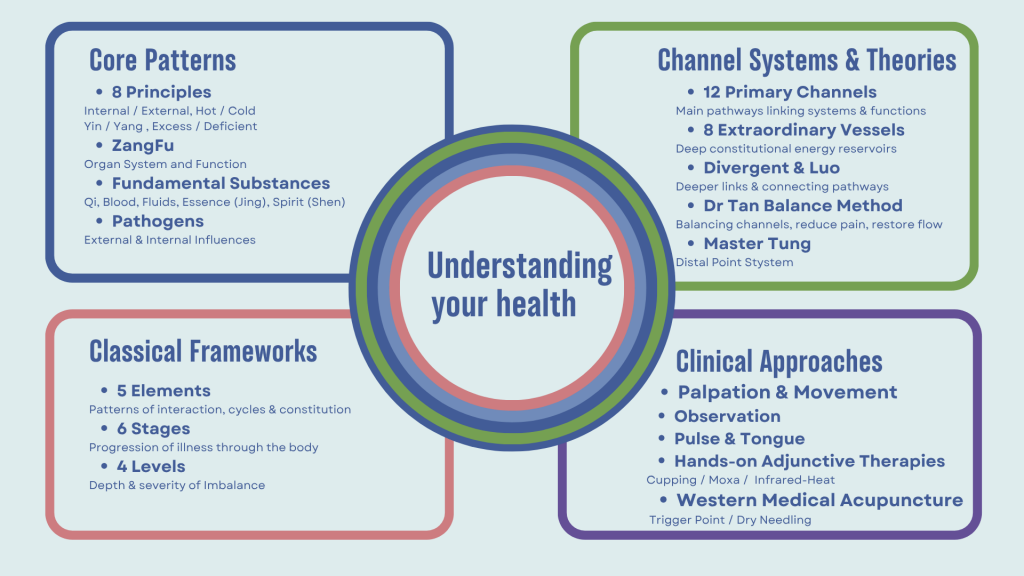
Acupuncture has its own clear framework for understanding the body. It uses a structured way of looking at patterns, systems, and how different parts of the body influence each other. You may have heard words like Qi or Channels before; in clinic, these are words we use to describe how the body communicates and where things may be out of balance.
Because I’m trained in several styles of acupuncture, I choose the approach that best fits your current health. The infographic below gives an overview of the systems I draw on, and shows how acupuncture uses a structured, whole body framework to guide treatment.
From a Traditional Chinese Medicine (TCM) perspective, we might talk about supporting Heart Shen (the mind/spirit), nourishing Blood and Yin, or calming an overactive Liver. In simple terms: we’re helping your system shift from survival mode into a more balanced, restorative state. By working with the Chinese Body Clock we can guide the body back into balance.
When Acupuncture Isn’t Enough — Real Clinical Examples
Sometimes Acupuncture alone is enough to support the body back into balance. Other times, symptoms improve but don’t fully resolve – or they return after a period of time. This is often a sign that something deeper is influencing how the body is functioning.
Below are two examples that illustrate the difference between when Acupuncture is enough, and when we may need to look further upstream.
Supporting Sciatica with Acupuncture
I support people experiencing sciatica using Acupuncture to address both symptoms and contributing factors. Sciatica can present in different ways, so I assess whether it reflects “true” sciatica – caused by compression or irritation of the sciatic nerve roots – or whether muscle tension or joint dysfunction is influencing the presentation.
Treatment focuses on working locally with areas of tension and nerve irritation, while also supporting the body’s broader pain response. As the body responds, symptoms often change in nature or location, including shifts in referred pain patterns.
A course of treatment typically involves 6-8 sessions, although this varies. Alongside treatment, I consider what may have contributed to the issue. Temporary triggers such as physical strain or prolonged driving may settle more easily. Longer term factors – postural habits, reduced core stability, or structural changes in the spine – often need to be addressed outside of clinic to support more sustainable improvement.
In many cases, Acupuncture alone is enough. In others, we may need to explore what is happening beyond the immediate pain – such as inflammation, nutrient status, or lifestyle factors that influence recovery.
You can have levels that are technically “within range” but not optimal for you. This is where a functional lens is helpful-we’re not just asking, “Is this enough to avoid disease?” but “Is this enough for you to feel well?”
Supporting Migraine Headaches with Acupuncture
I support people experiencing migraines by addressing both the presenting symptoms (Biao) and the underlying patterns (Ben). This involves building a clear picture of how migraines show up for you – the location and severity of pain, frequency of episodes, and any associated symptoms before, during, and after a migraine.
Treatment focuses on supporting the body’s ability to regulate, which may help reduce the frequency or severity of episodes. Where migraines are linked to factors such as stress or tension, this approach can be particularly supportive.
Alongside Acupuncture, I consider potential contributors such as visual strain, nutrient imbalances, or sensitivities like histamine responses. This is where Functional Nutrition can play an important role – helping explore and support underlying drivers, while Acupuncture focuses on overall regulation and symptom management.
Understanding Your Health Like a River

An analogy I often use in clinic is thinking about your health like a river. I first heard this described by Mel Hopper-Koppelman of Synthesis Health Lab, and it’s a simple way to understand how your body reflects everything going on around it.
Imagine your health as a river flowing through a landscape. As it moves, it constantly changes and reflects its environment – the seasons, the weather, the terrain, the speed of the water, even temperature changes.
The river can become blocked or polluted. The quality of the surrounding land, soil, and vegetation all influence the overall health of the system.
In the same way, your health reflects your environment – your diet, sleep, stress levels, medications, movement, work, and relationships.
Acupuncture, through the lens of Chinese Medicine, is powerful because it doesn’t view your symptoms in isolation. It works to restore balance across the whole system, taking into account the wider context of your life.
Functional Nutrition: A Systems Based Lens on Your Health
Do So where does Functional Nutrition fit into this whole body model, and what does it offer that Acupuncture alone can’t?
Functional Nutrition is based on Functional Medicine principles. It allows me to look at your health through a more analytical, systems based lens – identifying underlying imbalances and patterns that may be contributing to your symptoms, and offering a structured way to address them.
Returning to the river analogy: when something changes in the river, Functional Nutrition helps us investigate what has shifted. We might look upstream to understand where the imbalance began, test the water itself, or examine the surrounding environment to identify blockages or disruptions.
This approach reflects the work described by my professional body, BANT, where practitioners assess nutritional and biochemical imbalances and how these contribute to symptoms and wider health concerns. It’s a personalised approach shaped around your biology, your health history, and your goals.
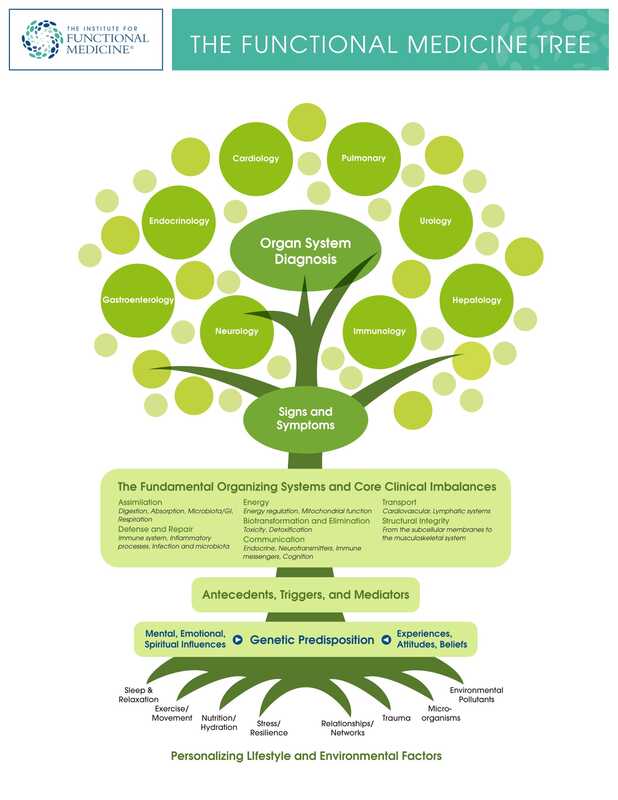
The Institute for Functional Medicine also use a tree model to show how upstream factors influence downstream symptoms. It’s another way of seeing how different systems interact and where imbalances may begin.
Functional Testing in Clinic
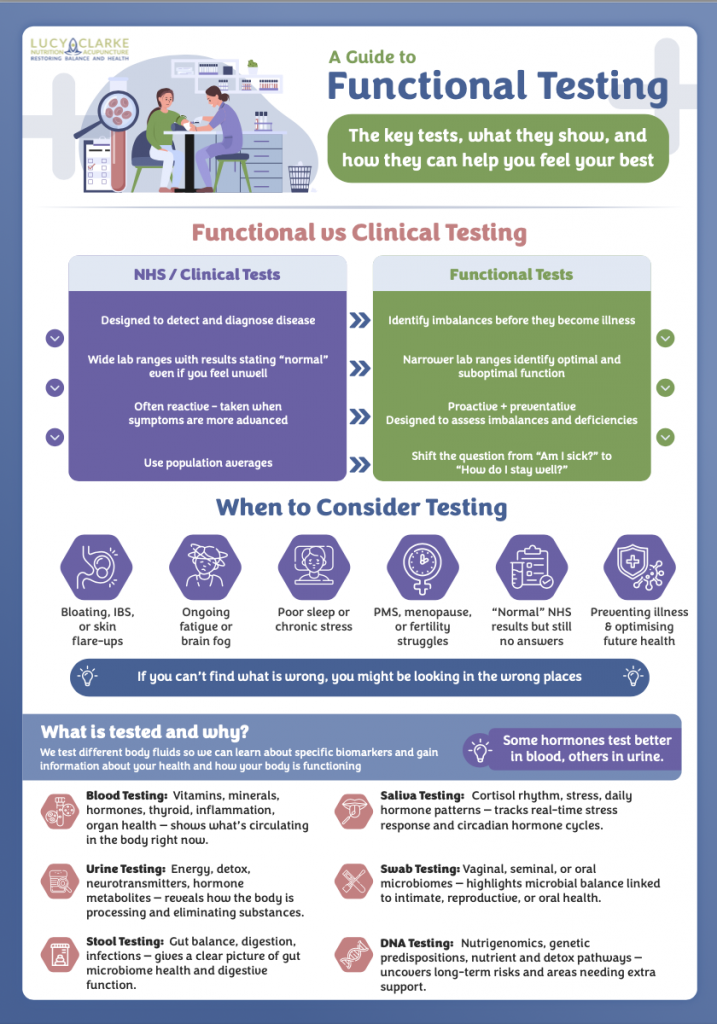
Functional testing can help guide and prioritise where to focus. Depending on your symptoms and health history, this may include blood analysis, stool testing, urine testing, or hormone mapping. We might explore gut microbiome health, nutrient status, inflammation markers, or metabolic function.
I also use DNA nutrigenomic testing, which offers insight into how your body may metabolise and absorb nutrients, and how nutrients can influence gene expression. The aim isn’t to diagnose medical conditions – that’s outside my scope – but to build a clearer picture of how your body is functioning and where support may be helpful.
A simple way to picture it is this: if Acupuncture helps us understand how the river is flowing, Functional Nutrition helps us test the water, look upstream, and examine the landscape around it.
When Functional Nutrition Gives Insight Acupuncture Can’t
Across many of the conditions I support, similar patterns tend to emerge. It’s common to see underlying deficiency alongside more acute or excess symptoms – where the body is under supported in some areas while presenting with more intense symptoms in others.
Emotional health is another area where both approaches can support. Experiences such as grief and stress can impact the body physically. Acupuncture may help regulate the nervous system and support resilience, while Functional Nutrition explores how lifestyle, diet, and overall health may be influencing energy, mood, and recovery.
Many conditions involve multiple systems – immune, hormonal, digestive, and nervous – working together. A combined approach can help support symptoms while exploring underlying contributors. This is often relevant in areas such as:
• autoimmune conditions
• endometriosis
• cardio metabolic health
• fertility and pregnancy
• weight management
• anxiety and depression
• chronic fatigue syndrome (CFS/ME)
These conditions can fluctuate over time, affecting different systems and energy levels. Supporting both immediate symptoms and underlying factors can help with longer term management.
Choosing the Right Approach for You

Deciding whether to begin with Acupuncture or Functional Nutrition depends on how you experience your symptoms, what you’ve already tried, and what you feel you need next.
For some people, Acupuncture provides the regulation and support the body needs. It can help reduce pain, calm the nervous system, and support the body’s natural ability to rebalance. For others, there is a desire for more specific answers – to understand why symptoms are happening, to what extent, and what can be done to support the underlying mechanisms.
There are also practical considerations. Some people respond strongly to Acupuncture, while others may not enjoy needles. In clinic, I often integrate additional therapies such as infrared heat, cupping, or moxibustion, particularly for musculoskeletal and systemic conditions, so treatment is always tailored to the individual.
Both approaches have their place. At different stages in life or health, one may offer more insight or support than the other. Sometimes, we need clear data and direction. At other times, we need to give the body space to regulate, rebalance, and settle into a new normal.
FAQ : Acupuncture & Functional Nutrition
How do I know whether I need Acupuncture or Functional Nutrition?
If your symptoms feel more physical – pain, tension, or acute changes – Acupuncture can be a helpful place to start. If you’re looking to understand why symptoms are happening, or feel something deeper may be driving ongoing issues, Functional Nutrition can offer further insight.
Can Acupuncture and Functional Nutrition be used together?
Yes – and in many cases they work very well alongside each other. Acupuncture supports regulation and symptom relief, while Functional Nutrition explores underlying contributors and helps guide longer term change.
What conditions do you commonly support in clinic?
I work with a wide range of health concerns, including:
• chronic pain
• digestive issues
• symptoms relating to stress and burnout
• fatigue
• hormonal health and fertility support for both men and women
How many sessions will I need?
This varies depending on your symptoms, how long they’ve been present, and how your body responds.
For more acute issues, a short course of 6–8 treatments may be enough. For longer standing or more complex conditions, we may begin with a course of treatment and then transition to more spaced maintenance sessions.
What happens in a first appointment?
Your first appointment is about building a clear picture of your health. We’ll go through your symptoms, health history, lifestyle, and any previous treatments you’ve tried. This helps me understand how your body is functioning as a whole.
If you’re having Acupuncture, treatment will usually take place in your first session.
For Functional Nutrition, we’ll begin mapping out possible next steps, which may include testing or initial dietary and lifestyle support.
Do I need testing for Functional Nutrition, or can I start without it?
Testing can be helpful, but it isn’t always necessary.
We can often make meaningful progress based on your symptoms, health history, and lifestyle alone.
In certain situations, testing provides valuable insight and allows for a more targeted and personalised approach.
What kind of testing do you offer?
Depending on your needs, I may recommend a range of functional tests. I specialise in combining functional test results with nutrigenomics — looking at how your genetic makeup may influence how you absorb, process, and utilise nutrients, and how specific nutrients can influence gene expression.
This helps build a clearer picture of how your body is functioning and allows for a more personalised approach to supporting your health.
Key Takeaways: What This Means for Your Health
• Restoring health means addressing both the symptoms you experience and the environment they exist within.
• Acupuncture works to support the body on a whole system level, helping regulate and restore balance.
• Functional Nutrition allows us to explore potential underlying contributors and gain a clearer understanding of how your body is functioning.
• For many people, combining both approaches offers a more complete and personalised way to support health. Small, consistent changes to diet and lifestyle can have a meaningful impact on how your body heals and functions over time.
NEXT STEPS:
Whether you’re unsure about your symptoms, feeling confused by conflicting advice, or looking to understand what may be contributing to how you’re feeling, you’re very welcome to get in touch. I’m always happy to talk through your situation and explain how I would approach your care, so you can decide if that feels right for you.
A short, focused call where we look at your situation, discuss possible next steps, and explore whether a personalised approach would be helpful for you.
References & Further Reading
The following organisations and resources provide further information on the approaches and concepts discussed in this article:
Professional Bodies
Evidence Based Acupuncture (EBA)
A comprehensive resource summarising scientific evidence for acupuncture across many conditions.
British Medical Acupuncture Society (BMAS)
Professional body for Western medical acupuncture; includes training, research summaries, and clinical resources.
British Acupuncture Council (BAcC) – Evidence A–Z
Evidence fact sheets for a wide range of conditions, with references and commentary.
(acupuncture.org.uk) NHS & Hospital Based
Acupuncture Resources
NHS – Acupuncture (General Overview)
Official NHS guidance on acupuncture, how it works, and when it is recommended.
NHS Centre for Integrative Care (Glasgow)
Whole person, integrative care service supporting long term conditions including chronic pain and fatigue.
Royal Marsden Hospital – Acupuncture Service
Information on acupuncture used to support people undergoing cancer treatment.
Functional Medicine & Functional Nutrition
Institute for Functional Medicine (IFM) – Functional Medicine Tree
The systems biology model often used to explain upstream/downstream interactions.
(General FM overview – ifm.org)
British Association for Nutrition and Lifestyle Medicine (BANT)
Professional body describing Functional Nutrition, personalised nutrition, and clinical frameworks.
Concepts & Thought Leader
Mel Hopper Koppelman – Synthesis Health Lab
Chinese Medicine Theory
Maciocia, G. – The Foundations of Chinese Medicine
(Reference for Ben & Biao – Root and Branch theory)