
Choosing which functional test to order can feel like stepping into a maze. You know you want answers. You know something isn’t quite right. But where do you start? Which test is relevant? And how do you make sense of the results?
In my previous blog, What Is Functional Testing – And How Can It Help Your Health?, I explained what functional testing actually is — including clinical vs functional ranges and when testing is most useful.
This is one of the most common conversations I have in clinic. People arrive feeling frustrated, confused, and often a little defeated. They’ve been told their blood tests are “fine,” yet they still feel exhausted, bloated, hormonal, foggy, anxious, or simply not themselves. And deep down, they know something is being missed.
That’s where functional testing becomes incredibly powerful. And importantly — you don’t need to know which test to order. That’s my job.
My role is to understand your symptoms, recognise when something needs deeper investigation, and choose the right test that will actually give us answers we can work with. Functional testing is not about testing everything “just in case.” It’s about being strategic, thoughtful, and guided by what your body is telling us.
Many of the people I work with have spent years feeling unheard or dismissed. They’ve bounced between appointments, been told their symptoms are “normal for their age,” or reassured that their bloods are fine — yet they still feel far from well. Functional testing offers something different: clarity, validation, and a deeper understanding of what’s really going on beneath the surface.
In this blog, I’m sharing the tests I use most often, why I use them, and how they help uncover the root causes of symptoms. I’ve also included five detailed case studies (names changed) to show how testing has guided real clients toward better health.
If you’d like to skip ahead to the case studies, here are quick links to each one:
Before We Even Think About Testing…

One thing I always say: We don’t start with the test. We start with the question.
What are we trying to understand more about?
Functional testing only works when it helps us answer something meaningful, so before ordering anything, I take time to really understand what’s going on for you. We talk through your symptoms in detail — how they feel, when they show up, and what they’re stopping you from doing. I look at your health history, your lifestyle, and how stress shows up in your body. If you menstruate, we explore your cycle too, because it offers so many clues. We also look at digestion, sleep, and your daily energy patterns. By the end, the right test becomes clear and purposeful.
This part of the process is often where clients feel the biggest sense of relief. For many, it’s the first time someone has taken the time to connect the dots — to look at their symptoms as part of a bigger picture rather than isolated issues. Functional testing works best when it’s rooted in this understanding, because it means every biomarker we test has a purpose.
This helps us identify which biomarkers will give us the clearest insight — and which test method is most accurate. For example, hormone metabolites are far more stable in urine than blood, so a DUTCH test is often more informative than a standard hormone blood test.
I only work with accredited UK and international labs with strong research behind their biomarkers. And I only order tests that are validated, reliable, and actionable. There’s no point testing something if we can’t do anything with the results.
It’s also worth saying that I only order tests that will genuinely guide change. Sometimes this means referring someone back to their GP for further investigation. Other times it means using results to shape a personalised nutrition and lifestyle plan. Either way, the goal is always the same: clarity and a clear path forward.
What Functional Testing Helps Us Explore
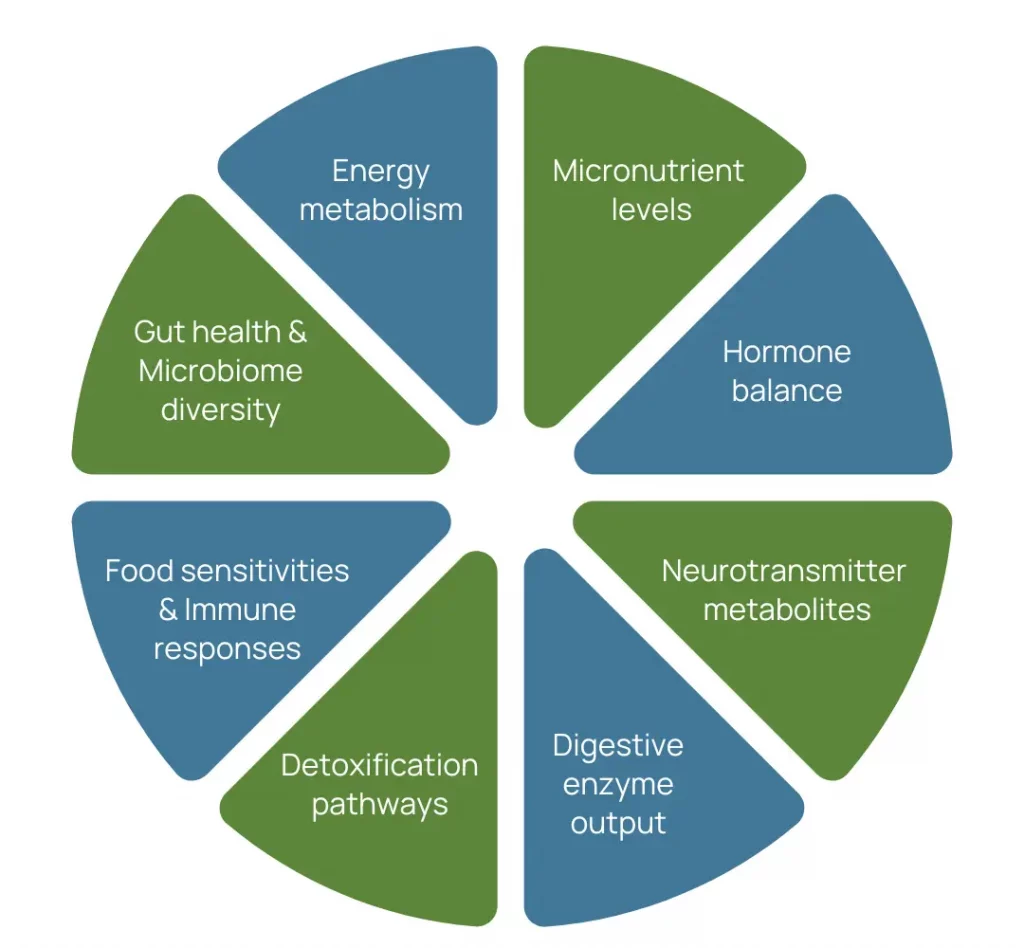
Testing help us understand why symptoms are happening — not just what the symptoms are.
One of the most powerful things about functional testing is how interconnected these systems are. Hormones influence digestion. Stress affects nutrient absorption. Gut health impacts mood. When we test strategically, we can see how these systems interact and that’s often where the real answers lie.
Comprehensive Blood Analysis: What It Shows and Why It Matters

Blood testing is the foundation of my clinical work. It gives us a snapshot of your health at a point in time and helps us understand what’s happening across multiple systems.
I’m also a trained phlebotomist, so clients can book their blood draw with me for tests ordered online (like Medichecks), or I can organise bespoke panels tailored to your symptoms.
Blood testing is considered the “gold standard” for many biomarkers because it allows us to measure nutrients, inflammation, hormones, and metabolic markers with precision. But it’s also important to know that some markers – like hormone metabolites – are better assessed in urine. This is why choosing the right test method matters.
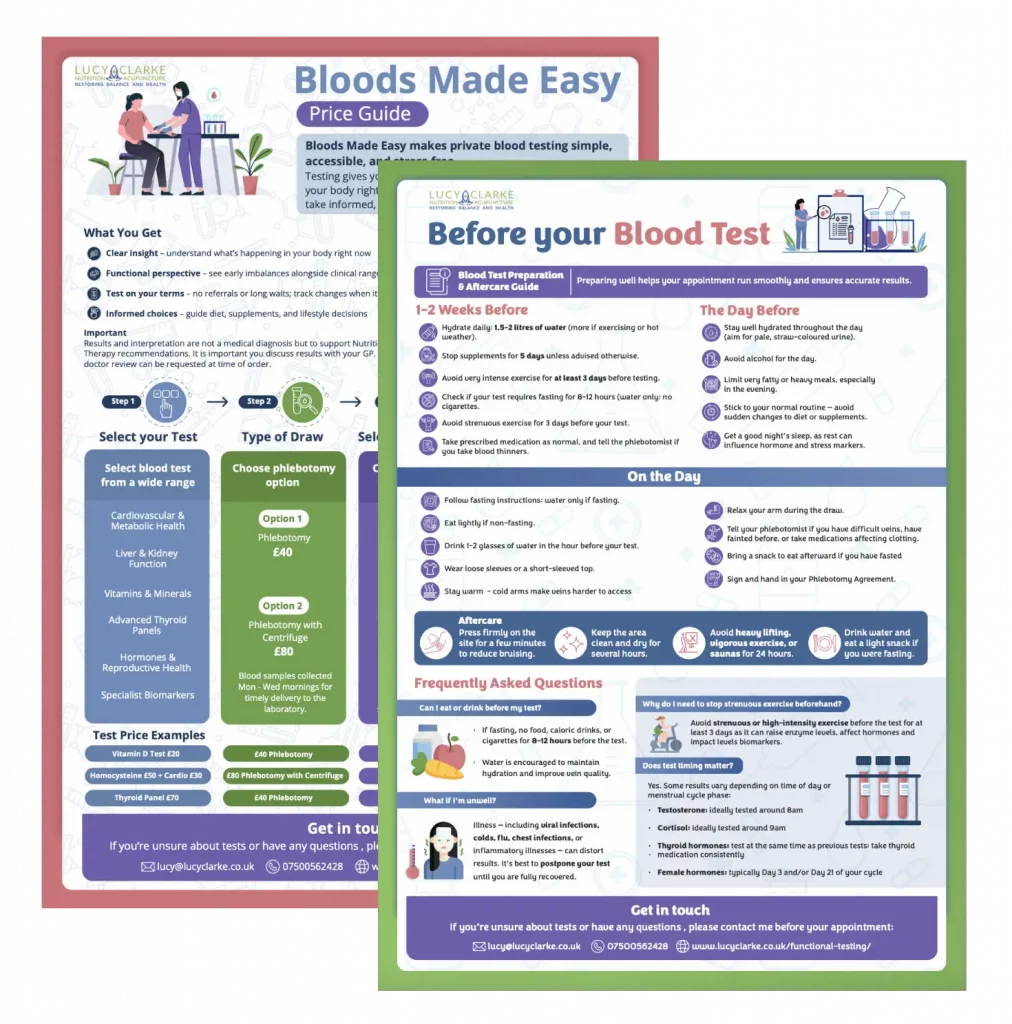
Markers regularly assessed:
- Cardiovascular health: lipid profile, ApoA, ApoB, homocysteine
- Thyroid function: TSH, free T4, free T3, thyroid antibodies
- Hormone balance: oestrogen, progesterone, testosterone, SHBG, FSH/LH
- Metabolic health: glucose, insulin, HbA1c, hs-CRP
- Micronutrients: vitamin D, B12, folate, ferritin, zinc, magnesium
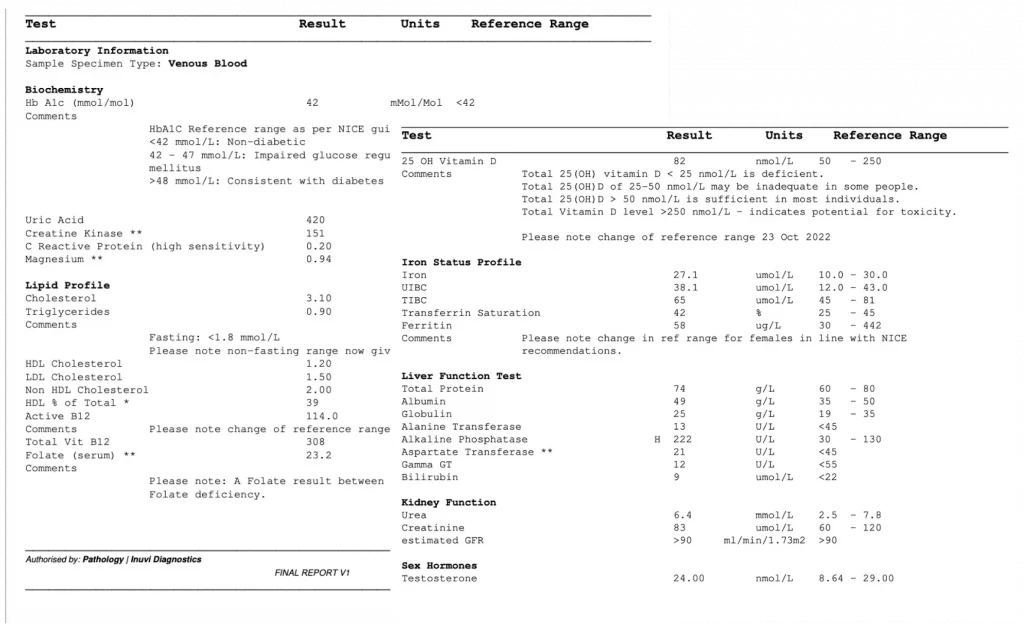
Case Study 1:
Georgia – Stress, Fatigue & Low Nutrients
Georgia, 42, came to me feeling utterly depleted. She described her afternoons as “a crash waiting to happen.” She relied on coffee to stay awake and sugary snacks to get through the school run. Her periods were heavy and painful, she struggled to fall asleep, and she often woke up feeling unrefreshed. She also mentioned feeling “foggy” at work — like her brain was wading through mud.
Her GP had run basic bloods and told her everything was “fine.” But Georgia knew her body well enough to know something wasn’t right.
What her blood test revealed
Her comprehensive blood panel showed:
- Low ferritin
- Low B12 and folate
- Low vitamin D
- Elevated morning cortisol
None of these were low enough for a medical diagnosis, but they were absolutely low enough to explain her symptoms.
Georgia told me she felt relieved — not because anything was “wrong,” but because something finally made sense. She said it was the first time she felt her symptoms were being taken seriously.
What we did next
We worked together to build a plan that felt realistic for her busy life:
- Nutrient-dense foods
- Targeted supplements
- Reduced caffeine
- Gentle evening routine
- Short bursts of movement
How Georgia changed
Within a few weeks, Georgia noticed she wasn’t crashing in the afternoons. She started sleeping better. Her sugar cravings reduced. She felt more focused at work. And she told me she finally felt “like herself again.”

Case Study 2: Mary – Subclinical Hypothyroidism
Mary, 56, had lived with symptoms of hypothyroidism for over 20 years. She described feeling like she was “moving through treacle.” Her hair had thinned, her motivation was low, and she struggled with weight gain despite eating well.
Her NHS tests only measured TSH and T4, which were borderline but not at a level for treatment. She felt stuck — not unwell enough for medication, but not well enough to feel like herself.
What her advanced thyroid panel revealed
Her results showed:
- Poor T4 → T3 conversion
- Low vitamin D
- Low co-factors needed for thyroid hormone production
- Mild inflammation
Our plan
We focused on:
- Iodine and Selenium-rich foods
- Vitamin D and B-complex
- A Thyroid Support Complex
- Blood sugar balancing
- Gentle movement
Mary’s transformation
Within six weeks, Mary reported feeling “lighter and clearer.” Her energy improved. Her brain fog lifted. She felt more motivated and more like the version of herself she remembered. She also said she wished she’d had this level of insight years ago — a reminder of how powerful the right testing can be.
Organic Acid Testing (OAT): Cellular Clues for Fatigue and Brain Fog
By Mosaic Diagnostics
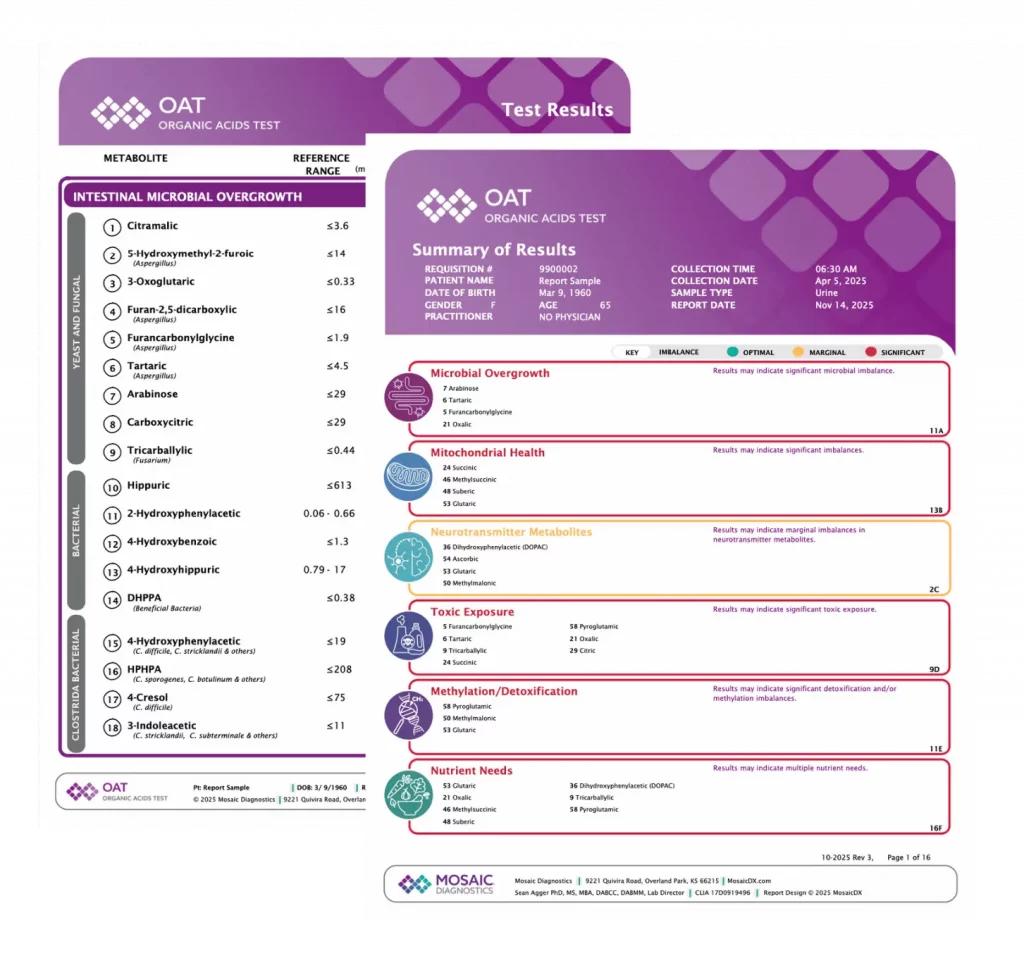
The Organic Acids Test is one of my favourite tools for understanding what’s happening at a cellular level. It gives us insight into energy production, detoxification, gut health, and even neurotransmitter balance.
It’s especially helpful for people with fatigue, brain fog, mood changes, or chronic gut symptoms.
OAT helps assess:
- Mitochondrial energy output
- Detoxification and oxalate metabolism
- Fungal and bacterial metabolites
- Neurotransmitter pathways
- B-vitamin and cofactor needs
- Yeast and clostridia overgrowth
Case Study 3: Pippa – Candida, Fatigue & Brain Fog
Pippa, 33, came to me feeling completely overwhelmed by her symptoms. She described her fatigue as “bone-deep.” She craved sugar constantly, especially in the afternoons. Her mood dipped after her menstrual cycle, and she felt foggy and unfocused. She also had bloating and digestive discomfort she assumed was “normal.”
What her OAT revealed
Her results showed:
- Elevated yeast metabolites
- High oxidative stress
- Low B2 and B6
- Neurotransmitter imbalances
Our plan
We worked together to:
- Reduce sugar
- Add protein and fibre
- Introduce fermented foods
- Support B vitamins
- Implement antifungal support
- Improve sleep and stress
Pippa’s progress
Within 6–8 weeks, Pippa noticed:
- Reduced cravings
- Clearer thinking
- More stable mood
- Less bloating
- More consistent energy
A follow-up OAT later confirmed improvements in yeast metabolites and mitochondrial function.
She told me she finally felt “in control” of her body again — something she hadn’t felt in years.
DUTCH Hormone Testing: A 24-Hour View of Your Hormones
By Precision Analytical
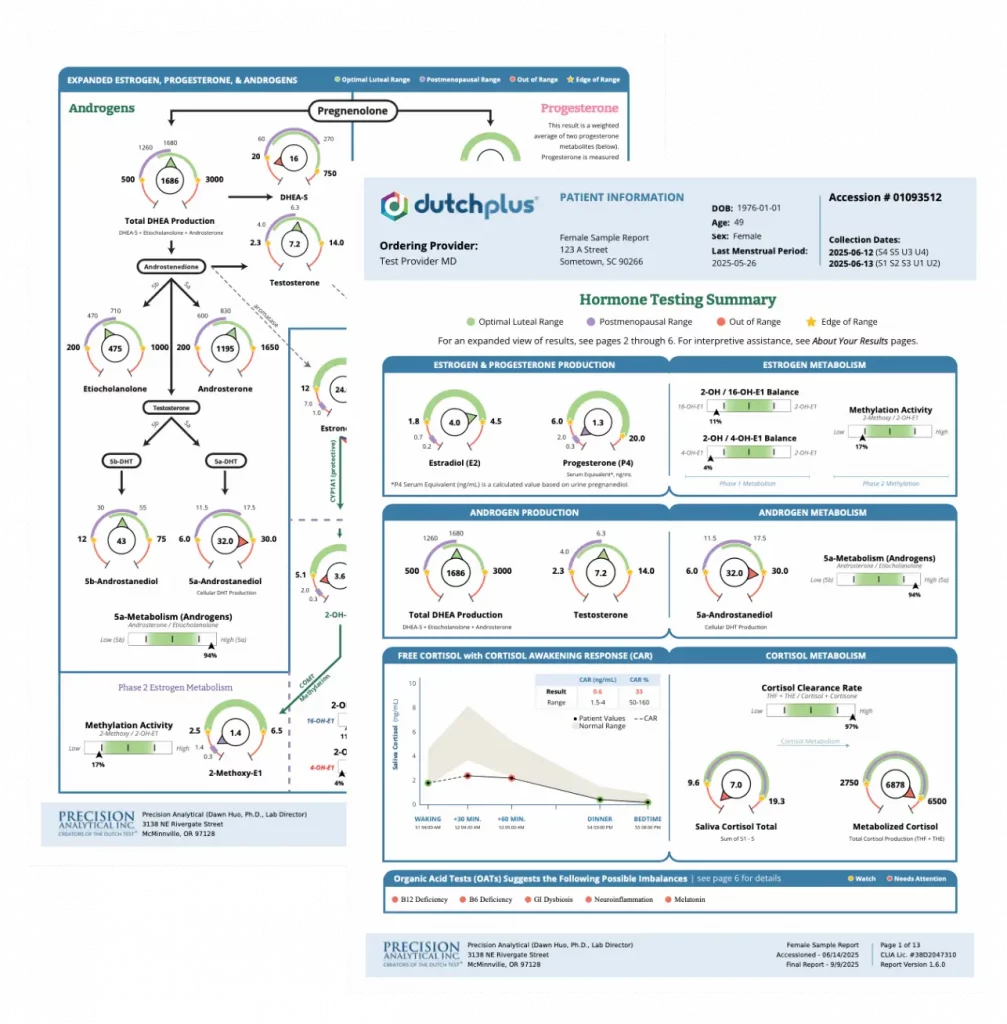
The DUTCH test gives us a 24-hour picture of hormone patterns, stress response, and how your body metabolises hormones. It’s far more detailed than a single blood test.
I order this test for PMS, irregular cycles, perimenopause, fertility challenges, low libido, sleep issues, and unexplained fatigue.
Markers include:
- Oestrogen metabolism
- Progesterone levels
- Cortisol rhythm
- Androgen and DHEA balance
- Melatonin output
Case Study 4: Jennifer — Painful, Irregular Periods & Bloating
Jennifer, 29, came to me feeling completely out of sync with her body. Her periods were painful, her cycles irregular, and she experienced bloating, anxiety, and disrupted sleep. She also noticed mood swings around ovulation that made her feel unlike herself.
She had tried various remedies — supplements, diet changes, exercise — but nothing made a significant difference.
What her DUTCH test revealed
Her results showed:
- Low progesterone
- Elevated oestrogen metabolites
- Impaired oestrogen clearance
- Disrupted cortisol rhythm
Our plan
We focused on:
- Liver-supportive foods
- Methylation nutrients
- Gut support
- Stress and sleep strategies
- Cycle tracking
Jennifer’s transformation
After three menstrual cycles, Jennifer reported:
- Less pain
- More regular cycles
- Improved mood
- Reduced bloating
- Better sleep
She felt more in tune with her body and more empowered in her daily choices. She also said she finally understood her cycle for the first time — something she wished she’d learned years earlier.
Microbiome Testing for Fertility and Intimate Health
By ScreenMe, Salient Bio, & Digital Microbiology
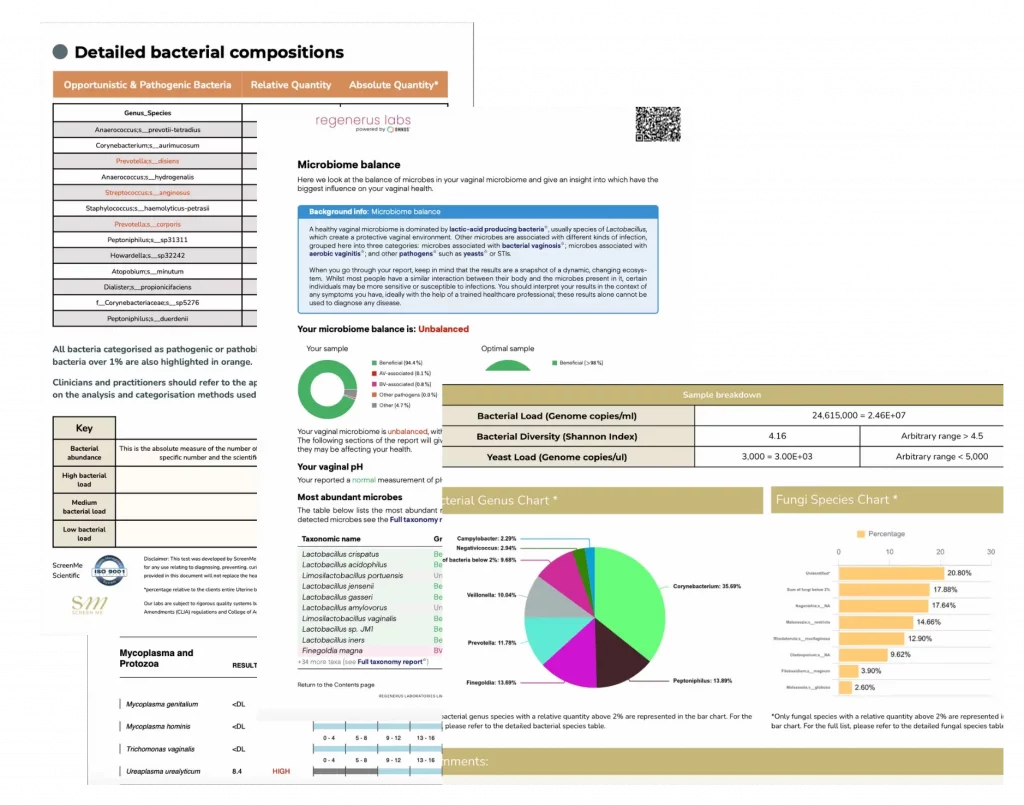
Images taken from Vaginal and Seminal Microbiome Test Results
These tests explore the vaginal, seminal, and urinary microbiomes — areas often overlooked in conventional testing but hugely important for Fertility Support, recurrent infections, and intimate health.
What we assess:
- Lactobacillus dominance
- BV-related bacteria
- Pathogens
- Yeasts and fungi
- Vaginal pH
- Seminal microbiome diversity

Case Study 5: Callum – IVF Support & Male Fertility
Callum, 38, and his partner had been trying to conceive for 4 years and were now preparing for IVF. He felt generally well, apart from mild bloating, but wanted to optimise his sperm health to give them the best possible chance.
What his tests revealed
His results showed:
• Mild inflammation
• Elevated blood sugar
• Ureaplasma overgrowth in semen
Our plan
We worked together to:
• Coordinate medical treatment for the Ureaplasma
• Support his microbiome with targeted probiotics and prebiotic foods
• Add male preconception nutrients such as zinc, selenium, omega‑3 fish oils and CoQ10
• Introduce an anti‑inflammatory diet
• Reduce alcohol during collection cycles
• Improve sleep and stress resilience
Callum’s outcome
His semen parameters improved significantly, leading to:
• Five viable blastocysts
• Four frozen for future transfers
Although their first embryo transfer sadly didn’t work, Callum and his partner felt reassured knowing they had strong embryos ready for a frozen embryo transfer (FET) round. He told me he felt empowered knowing he could actively support the process — something many men feel left out of during fertility treatment.
Specialist Immune Testing: When Symptoms Don’t Fit the Diagnosis
By Cyrex, Precision Diagnostics P88, Labs4More
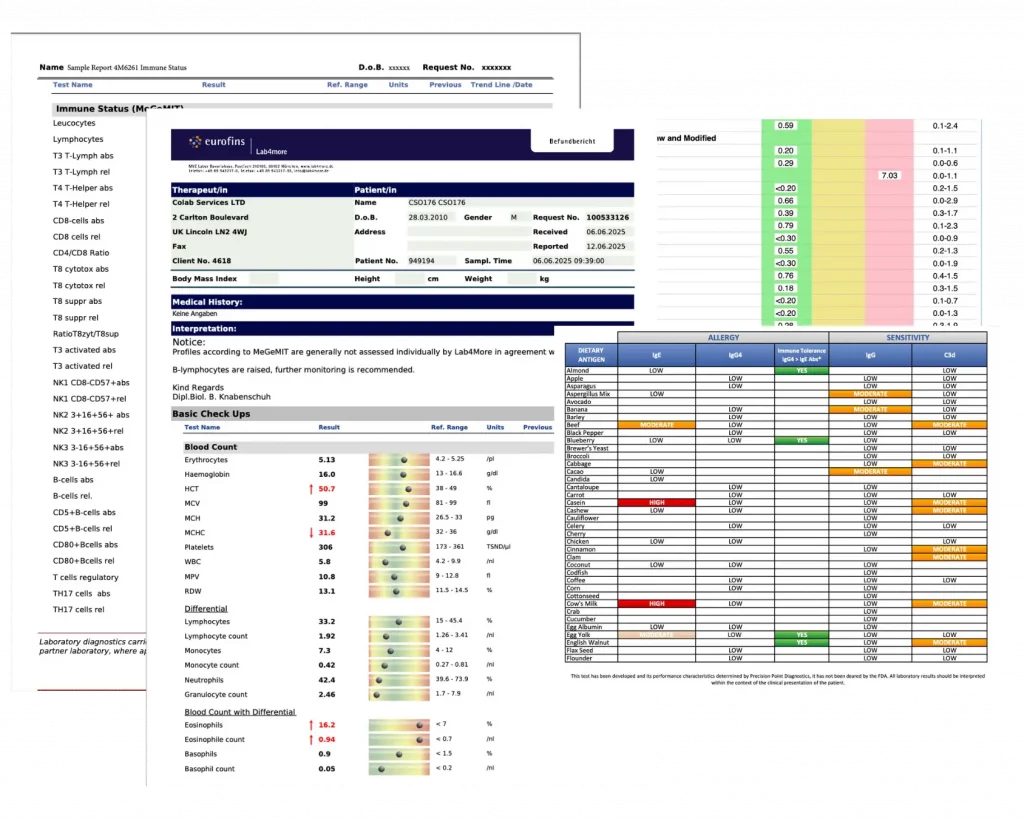
For clients with chronic inflammation, suspected autoimmunity, or complex digestive issues, specialist immune testing can uncover deeper triggers.
These tests explore:
- Intestinal permeability
- Food cross-reactivity
- Autoantibodies
- Immune cell profiling
I usually offer these tests to clients who are working with me for at least six months, as they require careful interpretation and follow-up.
These tests are incredibly detailed and often reveal patterns that have been missed for years. They’re especially helpful for people with long-term symptoms that don’t fit neatly into a diagnosis — the people who have been told “everything is normal” despite feeling anything but.
The Power of Personalised Insight: Nutrigenomics + Functional Testing
By Lifecode GX

For complex conditions, I often combine functional testing with Nutrigenomics to understand how your DNA influences your health — and how your environment, diet, and lifestyle may be amplifying or reducing those traits and your symptoms.
Overlaying genetic insights with functional test results helps me support biochemical pathways more precisely and create long-term strategies that truly optimise health. This is where functional testing becomes transformative. It’s not just about identifying what’s wrong — it’s about understanding what your body needs to thrive.
Key Takeaways
• Functional testing helps us understand why symptoms are happening.
• It gives us a window into your unique biology.
• When combined with expert interpretation and personalised nutrition, it can transform how you feel day-to-day.
Next Steps: How to Begin Your Functional Testing Journey
If you’re thinking about whether functional testing could help you, here are two easy ways to start:
- Book a free 15-minute discovery call to discuss your symptoms, history, and the tests that might suit you.
- Sign up for my free Guide to Functional Testing to get a clear overview of tests, what they show, and how to use the results.
References & Resources
Institute for Functional Medicine (IFM) https://www.ifm.org
British Association for Nutrition and Lifestyle Medicine (BANT) https://bant.org.uk
Blood Testing
Medichecks
Inuvi
Organic Acid Testing
OAT
https://mosaicdx.com/test/organic-acids-test/
DUTCH
Intimate Female and Male Health
Screen Me
Digital Microbiology
https://www.digital-microbiology.com
Salient Bio
Immune, Antibody & Food Reactions
Labs4More
https://www.lab4more.com
Cyrex
Precision Point Diagnostics P88
https://precisionpointdiagnostics.com/test/p88-dietary-antigen-serum